English
 南非荷兰语
 契维语
 阿姆哈拉语
 阿拉伯语
 阿萨姆语
 艾马拉语
 阿塞拜疆语
 白俄罗斯语
 保加利亚语
 孟加拉语
 波斯尼亚语
 加泰罗尼亚语
 宿务语
 科西嘉语
 捷克语
 威尔士语
 丹麦语
 de
 迪维希语
 希腊语
 英语
 爱沙尼亚语
 波斯语
 芬兰语
 爱尔兰语
 瓜拉尼语
 豪萨语
 希伯来语
 苗语
 克罗地亚语
 海地语
 匈牙利语
 亚美尼亚语
 印尼语
 冰岛语
 意大利语
 日语
 格鲁吉亚语
 高棉语
 韩语
 库尔德语
 吉尔吉斯语
 拉丁语
 卢森堡语
 卢干达语
 林加拉语
 老挝语
 立陶宛语
 拉脱维亚语
 毛利语
 马其顿语
 马来语
 马耳他语
 缅甸语
 尼泊尔语
 荷兰语
 挪威语
 齐切瓦语
 波兰语
 普什图语
 葡萄牙语
 罗马尼亚语
 俄语
 卢旺达语
 信德语
 僧伽罗语
 斯洛伐克语
 斯洛文尼亚语
 萨摩亚语
 索马里语
 阿尔巴尼亚语
 塞尔维亚语
 瑞典语
 斯瓦希里语
 塔吉克语
 泰语
 提格利尼亚语
 土库曼语
 土耳其语
 乌克兰语
 越南语
TEL Triase™ Single-Wafer Thermal Atomic Layer Deposition (ALD) Platform
Product Detail
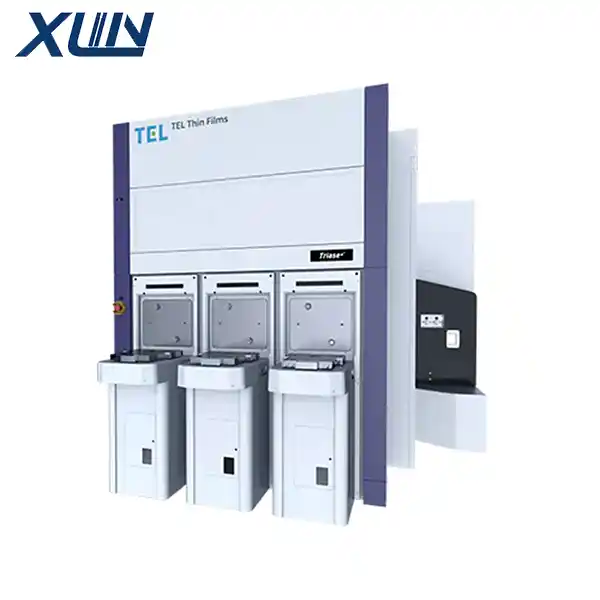 TEL Triase™ is a single-wafer thermal atomic layer deposition (ALD) platform from Tokyo Electron (TEL) designed for 300mm wafers. It is positioned as a high-volume manufacturing (HVM) tool for high-k gate dielectrics and conformal dielectric thin films used in advanced logic and memory chips—placing it in the same market segment as the ASM Pulsar series.
Process Focus: Triase utilizes a thermal ALD approach to deposit thin films at the atomic level. Typical applications include high-k gate dielectrics (such as hafnium oxide-based films), interfacial layers, and various other conformal dielectric films required for advanced technology nodes. By employing thermal ALD, the system avoids plasma-induced damage, making it well-suited for gate stack processes that are sensitive to interface quality. Its single-wafer architecture ensures precise thickness control and excellent within-wafer uniformity.
Platform Design: Built on TEL’s 300mm cluster architecture, the system allows for the integration of multiple process modules to meet high-volume throughput requirements. The reaction chamber features a low-volume design, combined with precise temperature control and a sophisticated precursor delivery system; this reduces cycle times while ensuring high film purity and wafer-to-wafer repeatability. The platform is designed for flexible process recipe switching, facilitating the integration of diverse solutions for advanced nodes.
Market Positioning: While both Triase and TEL’s EVAROS utilize a single-wafer thermal ALD approach, they differ in their specific process configurations and target applications—together, they address the demand for precision thin-film deposition at advanced nodes. Furthermore, Triase complements TEL’s batch-type TELINDY PLUS system in terms of production capacity and operational scale.
In short, Triase is a key HVM platform from TEL for single-wafer thermal ALD at advanced nodes, serving as a direct competitor to the ASM Pulsar and XP8 Synergis systems you have previously looked into.